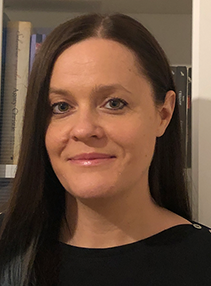
Małgorzata Adamczak
Adam Mickiewicz University, Poznań
Kształtowanie standardu stosowania genAI w pisaniu akademickim
For a number of years she has been involved in academic publishing and is currently an editor of the PRESSto Platform in the Information and Knowledge Transfer Department at the University Library in Poznań; in 2011–2021 she worked as a specialist at the Adam Mickiewicz University Press. She is the author and co-author of over a dozen scientific and popular science publications, including the recommendation on the use of generative AI in academic writing entitled “Stanowisko i rekomendacje Stowarzyszenia Wydawców Szkół Wyższych w kwestii stosowania narzędzi generatywnej sztucznej inteligencji (GAI) w pisaniu prac naukowych”. She is the assistant to the editor of the journal European Journal of Biological Research, a former member of the Association of Academic Publishers in Poland, and is currently a member of the Polish Librarians Association, Association for Research and Applications of Artificial Intelligence (ARAAI), and the communities AIrrival, Let’s Talk About AI.
Artificial intelligence can significantly support scientific research. However, its use must be methodically documented to preserve the integrity of science and its communication. Transparency in the use of generative artificial intelligence (GAI, genAI, GSI) tools in academic publications has become increasingly important for maintaining standards of academic integrity. In practice developing and enforcing universal recommendations is hindered by the rapid pace of technological change and by the diversity of disclosure practices regarding the use of AI tools depending on disciplines, regions, and publication cultures. The presentation will discuss the challenges publishers currently face in ensuring responsible use of AI in the preparation of scholarly publications. It will also address the causes and examples of misuse, as well as the guidelines and methods being tested by publishers to mitigate such practices. It will also aim to outline current trends and the work of the broader publishing community toward developing a universal standard for reporting AI use, solutions enabling a clear attribution of human and AI systems roles at different stages of the writing process (and research), as well as initiatives undertaken at the national level.
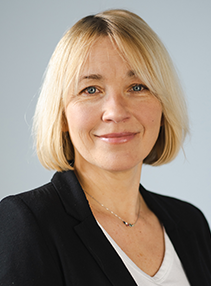
Laura Bandura-Morgan
OAPEN Foundation, and DOAB Foundation
Standards and challenges of open access to monographs
Laura Bandura-Morgan joined OAPEN and DOAB in 2022 as Funder Relations Manager but also is part of the Team evaluating publishers applying for inclusion to DOAB and OAPEN. She holds a Ph.D. in Molecular Biology and 10 years’ experience in Open Science, previously at Poland’s National Science Centre developing policies on research integrity, data management, and open access. She also contributed to Science Europe and cOAlition S initiatives, and participated in the EU-funded PALOMERA project.
The presentation will focus on good publishing practices in the field of open access to scholarly monographs. This will be considered in the context of growing requirements from research funding institutions, including the European Commission (Horizon Europe, ERC), as well as national and international funding agencies. It will discuss key elements of publishing policy that enable publications to meet grant requirements and open science standards, such as transparent peer review, clear licensing (e.g. Creative Commons), high-quality and complete metadata, the use of persistent identifiers (DOIs and ORCIDs) and long-term digital preservation. Using international infrastructures supporting open access to books (DOAB, OAPEN) as an example, the presentation will demonstrate how these standards are implemented in practice, and the organisational and legal challenges that Polish publishers face. This practical lecture presents solutions that help increase compliance with open access policies while maintaining the editorial quality and credibility of scholarly publications.
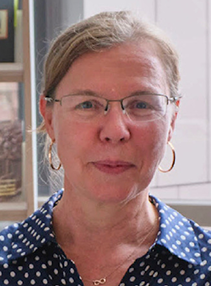
Margo Bargheer
Göttingen University
Reclaiming Scholarly Communication – Open Access provided by institutional publishing services and Diamond Open Access
She is a trained graphic designer and holds a master degree in social anthropology and media studies. She is head of the team for electronic publishing at Göttingen University Library, including Göttingen University Press, the university‘s repositories, the Diamond open access journal platform and other services around scholarly communication. Margo heads the AEUP (Association of European University Presses) board and is part of the German working group‘s sounding board for university presses.
Globally we see a trend towards outsourcing important aspects of scientific communication to profit-oriented actors, whether in the area of open access publications, research evaluation or dissemination of research results. On a positive note, some of these commercial actors offer highly professional services that are well marketed, standardised and efficient in providing visibility, discoverability and recognition for research results. Part of their efficiency for the public sector also lies in the fact that they can be acquired within the framework of market relations. But the efficiency comes at a price – raising prices straining library budgets, growing dependencies, loss of sovereignty over data and processes, and increasingly posing a threat to the integrity of research and the fundamental values of science. The presentation offers a SWOT analysis (strengths, weaknesses, opportunities and threats) of how and to what extent institutional publishing and Diamond Open Access can address the problems described. It provides an outlook on the path we must take to achieve a level of interoperability and visibility that is as professional as that of the for-profit sector, but above all serves the values and goals of science itself.
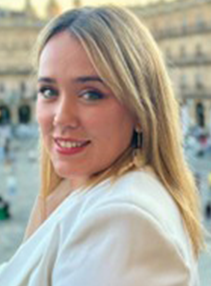
Paloma G. Blázquez
University of Salamanca, Spain
From Policy to Practice: A Decade of Open Access and Research Assessment Reform in Spain
Paloma G. Blázquez is a PhD candidate in the Doctoral Programme Education in the Knowledge Society at the University of Salamanca and a member of the GRIAL Research Group. She also has a professional background in research management. Her research focuses on the social impact of science, particularly on research evaluation, science policy and open science practices. She is interested in how alternative indicators, such as altmetrics and digital traces, can help capture the broader societal attention and engagement with research. Her doctoral project develops multidimensional approaches to better assess and understand the societal reach and value of scientific knowledge.
Spain’s trajectory in Open Access provides a robust empirical context for examining how research assessment policies influence scholarly practices. This contribution is part of a broader study on the evolution of Open Access and research assessment in Spain. Initial national incentives to deposit research outputs led to uneven progress across disciplines and regions, revealing structural differences that persisted for years. A significant regulatory shift emerged as Spain aligned more closely with reform frameworks such as DORA and, subsequently, European initiatives like COARA. The change in national evaluation criteria, led by ANECA and recognized by COARA as a proactive step toward responsible assessment, has created a new policy environment in which Open Access plays a central role in research evaluation. This contribution presents preliminary findings from a longitudinal study analysing Open Access trends in Spain over the past decade, using resources such as SciVal, InCites, and others. The analysis explores annual growth, variation across Open Access routes, disciplinary and regional differences, and the influence of publicly funded research. Early results indicate potential inflection points aligned with key policy milestones, suggesting that explicit assessment requirements may hold greater transformative potential than the softer incentives used in earlier stages. By positioning Spain as an empirical case within Europe’s broader reform movement, the study invites discussion on how policy design, institutional capacity, and infrastructural limitations will shape the next stage of Open Access implementation—particularly in a context where demands on repositories are increasing, and these infrastructures must adapt to the new environment of scientific dissemination and evaluation, both in capacity and functionality.
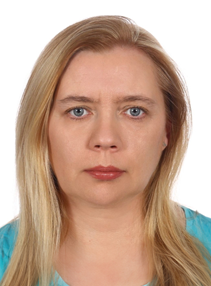
Aneta Drabek
University of Silesia
Wolno, czy nie wolno? Polityki wydawców dotyczące wykorzystania sztucznej inteligencji (na wybranych przykładach)
PhD in humanities (specialization: bibliology), qualified library curator at the Library of the University of Silesia. Her professional responsibilities include managing access to databases, preparing bibliometric analyses for researchers, providing training on the use of databases and scientific sources, conducting information searches, and overseeing all activities related to the recording and reporting of the scientific output of University of Silesia employees. She has been co-creating the database Arianta. Polish Scientific and Professional Electronic Journals for over 20 years. Her research interests focus on bibliometrics and scientometrics. She also analyses the standards and editorial practices of Polish scientific journals, evaluation criteria, and the principles governing their indexing in international databases. Since 2022, she has been the editor of the CEJSH database.
The rapid development of artificial intelligence (AI) tools and the growing availability of solutions based on generative models have prompted an immediate response from the publishing community. Scientific publishers have been compelled to update their guidelines for authors, reviewers, and editors by introducing regulations governing the permissible use of AI in the publication process. These guidelines are subject to frequent revisions, resulting both from the dynamic development of new technologies and from the expanding understanding of their functioning, limitations, and ethical implications. This presentation provides an analysis of AI policies adopted by selected international publishers, with particular emphasis on the regulatory frameworks implemented and the identification of emerging best practices. Subsequently, the situation of Polish academic publishers is examined, including the directions of current initiatives and the progress made in introducing comparable regulations. In addition, author guidelines published on the websites of scientific journals are analyzed in order to determine whether, and to what extent, editorial offices have addressed issues related to the use of AI tools. Finally, the authors propose a set of recommendations for publishers and journal editorial offices aimed at supporting the development of transparent and coherent policies regulating the use of artificial intelligence in scientific communication.
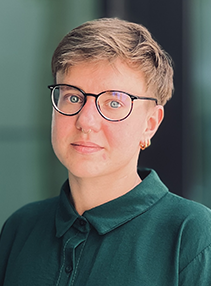
Ariel Drozd
SAGES
Dostępność cyfrowa plików PDF: czego AI (jeszcze) nie rozumie na temat struktury publikacji?
He is a linguist and an aspiring programmer. A graduate of Applied Linguistics and Copywriting, currently completing a degree in Language Science and Technology at the University of Warsaw. While working on research and implementation projects, he applies interdisciplinary knowledge to identify and solve atypical problems.
Experience:
Since 2020 – Sages project focused on the automatic accessibility of PDF files: preparation of benchmark data and analysis of model outputs, providing substantive support to the engineering team, and delivering training sessions, workshops, and webinars on digital accessibility, 2023-2024- freelancing in commercial projects related to data extraction and natural language processing (DeepL, Diuna), 2016-2023 – participation in DARIAH and CLARIN-PL projects (Wrocław University of Science and Technology, Institute of Computer Science Polish Academy of Sciences): annotation of linguistic data, development of the Polish wordnet (Słowosieć), digitisation of stenographic records.
Specialisations:
Digital editing: editing, proofreading, typesetting and layout, basics of graphic design, copywriting focused on plain language and effective communication, technical and practical aspects of communication with consideration for the needs of people with disabilities and other marginalised groups, computational linguistics, data science, machine learning, natural language processing and fundamentals of programming and statistics.
Publications (books, articles, or brochures) generally constitute complex and non-linear structures, combining the main text with various paratextual and hypertextual elements. Readers who rely on visual perception can navigate this labyrinth easily thanks to numerous visual cues. However, ensuring accessibility for users of screen readers and Braille displays requires a proper and unambiguous representation of this structure through non-visual means (for example, tags). This poses a particular challenge in the case of the PDF format, which—mimicking media such as printed books—allows the creation of a file whose semantic structure must be reconstructed intuitively and independently during reading, mainly based on the appearance of individual elements. Establishing this structure automatically opens up the possibility of quickly adapting such a file to the needs of visually impaired users.
In automatic processing, a PDF file is usually treated either as a linear sequence of characters and images or as a collection of pages with fields of specific spatial layout and content—both approaches often neglect many paratextual relationships, such as those indicated by references. These approaches are fully sufficient for many tasks (including searching, indexing, or information extraction), but they have significant limitations when it comes to explicitly identifying individual structural elements and the relationships between them for the purpose of digital accessibility. Developing AI methods that interpret a PDF at a higher level of abstraction, in accordance with the paratext theory introduced by Gérard Genette, has the potential to bring automatic document structure extraction closer to intuitive human interpretation, thereby facilitating meaningful and accessible presentation of document content for users of assistive technologies.
Jonathan Dumont
University of Liège, Belgium
'Circular Materials and Chemistry' (CMC): A proof-of-concept journal leading to a Diamond Open Access foundation
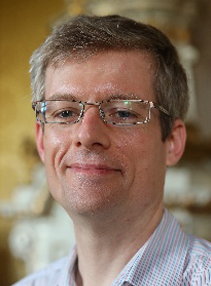
He holds a PhD in History, Art and Archaeology from the University of Liège, Belgium (2010). He is currently a project manager at the same university. His historical research focuses on the Renaissance and the history of political ideas and political discourse. He has also developed an interest in Open Science and Open Access. He is currently establishing a new Diamond Open Access journal, CMC (Circular Materials and Chemistry: A Cross-Disciplinary Journal), as well as federal Belgian structure to promote Diamond Open Access in Belgium.
This project was launched in the context of the inter-university project COARA of the Wallonia-Brussels Federation (Belgium), in particular its work package 2 (Open Data and Open Access), coordinated at the University of Liège by RISE and the ULiège Library. CMC covers Circular Chemistry: chemistry that aims to design new materials and recycle them based on ecological, environmental and social principles. This field is at the intersection of materials science, economics and society. CMC is therefore an interdisciplinary journal. In two years, CMC has been established with its aims and scopes, boards, internal rules, and workflow (peer reviewing process), guidelines for authors and depository process. CMC’s board is currently working on the first issue of the journal. CMC is a proof of concept that aims to contribute to the transition from Gold to Diamond OA. It wants to demonstrate that an international, high quality Diamond OA journal is feasible in STM in order to convince decision-makers and researchers that Diamond OA is a stable and viable scientific publishing economy. CMC has given rise to a larger project aimed at establishing the legal ownership of the journal and ensuring its financial stability. This project is a Belgian Royal Foundation for Diamond Open Access, which is supported by all Belgian institutions involved in Diamond Open Access, as well as international partners. The foundation will support other Diamond OA journals.
Martina Dvořáková
Masaryk University, the Czech Republic
Shaping Diamond Open Access in Europe: Key outcomes from PALOMERA, DIAMAS and CRAFT-OA project
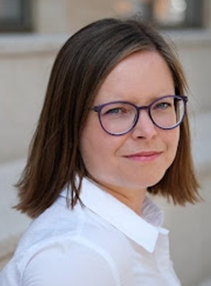
She is an editor at Masaryk University Press, where she focuses on scholarly and popular science book production. In addition to her editorial responsibilities, she coordinates the Czech National Diamond Open Access Capacity Centre hosted by Masaryk University. Martina was involved in the EU-funded CRAFT-OA project, contributing to the development and dissemination of tools that support Diamond OA journal publishing. She also serves as Secretary to the Board of the Association of European University Presses (AEUP), where she supports collaboration and knowledge sharing among European university publishers. With a background in communication and publishing, she is passionate about building bridges between academia, publishers, and the public, and about advancing open, inclusive, and high-quality scholarly communication across Europe.
The landscape of Diamond Open Access in Europe is being reshaped by three major Horizon Europe projects: PALOMERA, DIAMAS and CRAFT OA. Together, they provide a coordinated foundation for strengthening scholar led publishing and improving the sustainability, quality and visibility of Diamond OA journals and publishers. This presentation will summarize their key outcomes, including PALOMERA’s policy recommendations for supporting non APC models, DIAMAS’s tools and guidelines for enhancing institutional publishing practices, and CRAFT OA’s development of shared open-source components, as well as the creation of the Diamond Discovery Hub – a comprehensive registry of institutionally published and scholar led Open Access journals without author fees in Europe. A central achievement of the projects is the creation of the European Diamond Capacity Hub (EDCH), complemented by emerging national capacity centres that will offer long term support, training and technical infrastructure for Diamond OA actors across Europe. The talk will also outline current developments and near future trends in Diamond OA in Europe and globally, highlighting growing policy support, community led infrastructure building and the expanding role of Diamond OA in promoting equitable scholarly communication.
Rossella Filadoro
University of Milan, Italy
Managing a quality scientific publishing initiative in a complex landscape: the case of the Riviste Unimi platform
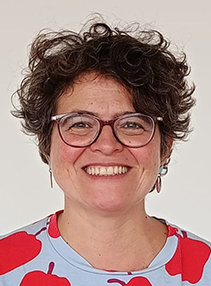
She has been working at the University of Milan since 2005, initially within the Libraries, and since 2019 in the Journals section of Milano University Press, the diamond open access publishing house of the university.
Riviste Unimi is the journals platform of the University of Milan. Established in 2008 with just two titles in the Humanities and Social Sciences, it now hosts more than 70 journals across multiple disciplines and is a part of the University’s publishing house, Milano University Press.
The platform follows a Diamond Open Access model, with no costs for authors or readers.
The platform is totally funded by the University. While journals retain full autonomy over their editorial decisions, they are required to meet quality standards defined by a central support office, which continuously monitors updates on these criteria. Compliance with these requirements enables journals to be indexed in major international databases and repositories, significantly increasing their visibility, dissemination, and downloads.
Over the years, commercial publishers have occasionally approached the platform or individual journals with proposals for collaboration or acquisition. These experiences highlight the importance of promoting awareness of Open Science principles to protect a non-commercial, public-interest approach to the dissemination of scholarly knowledge.
Paola Galimberti
University of Milan, Italy
Open science in Italy: focus on OA to research publications
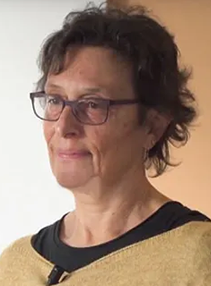
She works at the University of Milan and is responsible for all tools supporting open science: institutional research archive, research data archive, Milano University Press (diamond open access), training activities. She is a founding partner and member of AISA (Italian Association for Open Science), she is editor for Italy and Germany of the Directory of Open Access Journals. She represents the University in the working groups on Open science of the European alliances (4euplus, LERU). She is a member of the ICDI competence centre, of Operas’ SAC and of the editorial board of ROARS for which she edits the open science section. She is editor for Open-Science.it.
Italy’s path toward Open Science has been shaped more by formal adherence to international declarations than by concrete implementation. Despite early commitments such as the Messina Declaration (supporting the Berlin Declaration) , national progress has been limited, and open access has largely advanced only through EU mandates and costly transformative agreements that have not produced any cultural change.
Alongside these challenges, a small but significant ecosystem of diamond open‑access platforms and university presses has emerged, driven by institutional commitment rather than ministerial support. Yet the absence of national data and coordination continues to hinder coherent policy development.
Nevertheless, grassroots initiatives promoting open science are taking shape – unevenly but steadily – spreading through mutual learning and institutional collaboration.
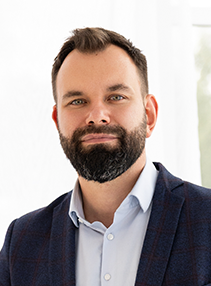
Piotr Górecki
Legente Tax & Law
AI w nauce a prawo: między wsparciem badacza a wyzwaniami regulacyjnymi
Legal advisor and managing partner at Legente Tax & Law. Doctor of Law specialising in intellectual property law (University of Wrocław). Graduate of postgraduate studies in Managing Business, International Finance, IT School for Lawyers and the international programme in private law Programme in European Private Law for Postgraduates. Author of publications on copyright, civil law, trademarks, EU law and investment funds in Polish and English. Entrepreneur, co-founder and CEO of Cubic Orb – one of Poland's largest producers of software for surveying and related industries.
The presentation will begin by discussing the problem of authorship and the rights to research results (including developmental works) created with the use of AI. It will present the circumstances in which the use of AI in scholarly activity allows a given output to qualify as a protected work or an invention, and the legal basis on which a prompt can be subject to protection. It will also address whether using AI may disqualify a work as a scientific work or a doctoral thesis. Furthermore, the presentation will cover issues concerning the attribution of authorship for works utilizing AI. The second part will examine the conditions under which copyright law permits the use of third-party works in the process of text and data mining. It will outline, among other things, how the rules for mining work for scientific research purposes differ from mining for other purposes, and what risks are associated with changing the method of mining. The presentation will also indicate the conditions under which higher education and research institutions may store the third-party works they are mining. Finally, the presentation will outline the legal limitations and obligations related to scientific research and developmental works arising from the AI Act. It will discuss the conditions under which AI systems and models used in scientific activities are exempt from the provisions of the AI Act. Additionally, it will present the duties and responsibilities associated with the commercialization of research results involving AI systems and models.
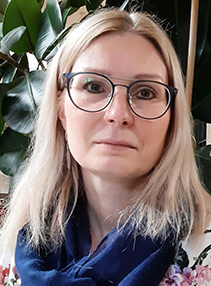
Aurelia Grejner
The University of Warmia and Mazury in Olsztyn, Association of Academic Publishers
Rola Stowarzyszenia Wydawców Szkół Wyższych oraz Komisji ds. Wydawnictw Naukowych przy KRASP w kształtowaniu współczesnego modelu publikowania naukowego w Polsce
She is a graduate in Polish Philology, with specialisations in teaching and theatre studies. She serves as Editor-in-Chief at the Publishing House of the University of Warmia and Mazury in Olsztyn. She is actively involved in the Stowarzyszenie Wydawców Szkół Wyższych (Association of Academic Publishers), serving as Vice-President since 2013 and as the President of the Management Board since 2019. Since 2020, she has been a member of the Commission for Scientific Publications at the Conference of Rectors of Academic Schools in Poland (KRASP). She serves on the jury of the ACADEMIA competition for the best academic and scientific book. In these roles, she actively participates in the development of the academic publishing market in Poland. She is a co-organiser of the annual National Conference of the Commission for Scientific Publications at KRASP and of the Conference of the Association of University Publishers. She is also the organiser and co-organiser of two competitions: GAUDEAMUS (awarded during the International Book Fair in Kraków) and the Father Edward Pudełko Award of the Association of University Publishers (presented during the Poznań Book Fair). Her professional interests include new technologies in academic publishing and the effective dissemination of scientific content, including Open Access.
This presentation will focus on the role of the Association of Academic Publishers and the Committee on Scientific Publishers at CRASP (Conference of Rectors of Academic Schools in Poland) in shaping the contemporary model of scholarly publishing in Poland.
The starting point is the observation of dynamic transformations within the scholarly communication system, driven by digitisation, the development of open access, and the significance of evaluation mechanisms. In this context, a specific task falls to intermediary institutions that bridge the gap between the publishing community and the regulatory environment, while integrating all stakeholders of the publishing process.
The aim of this presentation is to demonstrate how these entities influence the scholarly publishing system through expert, representative, and mediatory activities. The primary mechanisms of their impact will be discussed, including participation in legislative consultations, the formulation of recommendations, and engagement in public debate. At the same time, key challenges will be identified, including the discrepancy between the evaluation system's requirements and the mission of scholarly publishers (with particular emphasis on university presses), as well as organisational and financial constraints.
The role of the entities mentioned above is indirect but systemically significant. It largely involves integrating the publishing community, responding to current needs, and formulating shared goals and development directions.
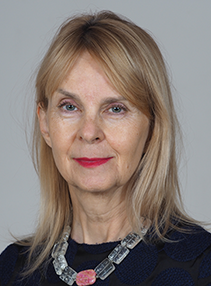
Iwona Hofman
Maria Curie-Skłodowska University in Lublin
Wykład otwierający: Polityka otwartego dostępu w długoterminowej strategii rozwoju badań naukowych w Polsce
Professor of Humanities, represents the discipline of social communication and media studies. From 2016 to 2019, she served as Dean of the Faculty of Political Science at Maria Curie-Skłodowska University. Since 1 October 2019, she has served as Director of the Institute of Social Communication and Media Studies at the same university. Her research focuses on journalism studies and the political thought of the Polish émigré community after 1945, with particular emphasis on the work of Jerzy Giedroyc and the journal Kultura. She holds numerous honorary and social positions, including President of the Polish Communication Association; Chair of the Council of Scientific Societies at the Presidium of the Polish Academy of Sciences; Chair of the Committee on Social Communication and Media Studies of the Polish Academy of Sciences; and Member of the Council of Scientific Excellence. In 2010, she received the title of Woman of the Year in the Science category awarded by the Women's Congress. She has also been decorated with the Gold Cross of Merit and the Medal of the President of the City of Lublin. She is a laureate of the Bene Meritus Terrae Lublinensi distinction and the Angelus Award in the Media Culture category.
The long-term strategy for the development of scientific research in Poland is based on the science policy framework developed through public consultation in 2025. The policy includes, among other aspects, an analysis of the effectiveness of scholarly communication and knowledge dissemination in the context of global information security challenges. One of the key elements of this policy framework is the system of lists of academic journals and publishing houses, developed using expert assessment and bibliometric data. When analysing the premises of the long-term strategy, it is important to consider how open access is defined as a factor supporting quality improvements in access to knowledge. Current academic discussions highlight issues concerning the circulation of digital scholarly content, improving research quality, promoting science within society, and the more efficient use of public funding. According to the 2015 document “Directions for the Development of Open Access to Publications and Research Results in Poland”, the Ministry of Science and Higher Education continues to update its recommendations on open access and, more broadly, open science. This presentation will address proposed systemic solutions to existing challenges, as well as examples of good practice in the field of open access.
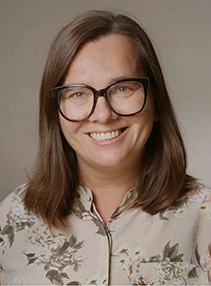
Anna Kamińska
University of Silesia
Wolno, czy nie wolno? Polityki wydawców dotyczące wykorzystania sztucznej inteligencji (na wybranych przykładach)
Doctor of Humanities, assistant professor at the Institute of Cultural Studies at the University of Silesia in Katowice, and employee of the Library of the Silesian University of Technology in Gliwice. Her research interests include information science, scientometrics, bibliology, scientific communication and issues related to natural language processing. Her studies focus on citation analysis, bibliographic databases, and sustainable development in library science. She is also interested in the potential of large language models and their use in scientific research and academic communication.
The rapid development of artificial intelligence (AI) tools and the growing availability of solutions based on generative models have prompted an immediate response from the publishing community. Scientific publishers have been compelled to update their guidelines for authors, reviewers, and editors by introducing regulations governing the permissible use of AI in the publication process. These guidelines are subject to frequent revisions, resulting both from the dynamic development of new technologies and from the expanding understanding of their functioning, limitations, and ethical implications. This presentation provides an analysis of AI policies adopted by selected international publishers, with particular emphasis on the regulatory frameworks implemented and the identification of emerging best practices. Subsequently, the situation of Polish academic publishers is examined, including the directions of current initiatives and the progress made in introducing comparable regulations. In addition, author guidelines published on the websites of scientific journals are analyzed in order to determine whether, and to what extent, editorial offices have addressed issues related to the use of AI tools. Finally, the authors propose a set of recommendations for publishers and journal editorial offices aimed at supporting the development of transparent and coherent policies regulating the use of artificial intelligence in scientific communication.
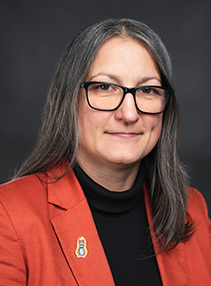
Beata Klyta
University of Silesia
Od idei do praktyki. Wdrożenie dostępności dla osób z niepełnosprawnościami w codzienną rutynę w wydawnictwie naukowym
The Director of the University of Silesia Press. She has been associated with academic publishing for over fifteen years. Since 2025, Vice-Chair of the OPERAS-PL Consortium Council. In her professional work, she is passionate about user-centred publication design and seeks ways to integrate editorial traditions with modern digital technologies. In managing an academic publishing house, she draws on her broad educational background in economics, philology, information technology, and management. In her free time, she relaxes by swimming, walking, cycling, cooking, or reading.
Academic publications are one of the most challenging forms of publishing. Adapting them to meet accessibility requirements for people with disabilities is often seen by publishers as an additional burden, and these changes have been introduced without the possibility of obtaining additional funding to cover the increased costs of publishers’ day-to-day operations. The Act of 26 April 2024, which comes into force on 28 June 2025, requires publishers to ensure the availability of e-books, which has prompted the University of Silesia Press in Katowice to reorganise its operations. A successful reorganisation process requires fostering emotional engagement with the change process among all the publishing house’s staff. The process has been divided into four stages: 1. Fostering empathy towards people with disabilities through a series of training sessions designed to raise awareness of the barriers they face on a daily basis and ways to reduce them. 2. Mapping the publishing house’s current workflow in line with LEAN principles and value creation. 3. Identifying all sources of waste within the process and optimally integrating new elements that promote the accessibility of electronic academic publications. 4. Establishing the new workflow jointly developed by the team at the University of Silesia Publishing House.
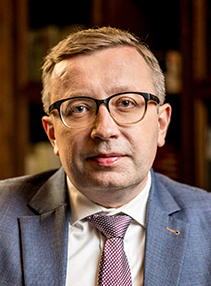
Adrian Niewęgłowski
Maria Curie-Skłodowska University in Lublin, KOPIPOL
Pojęcie wydawcy prasy a zbiorowe zarządzanie prawami autorskimi
Since the beginning of his academic career, he has been associated with the Faculty of Law and Administration at UMCS in Lublin. He deals with issues of commercial law and intellectual property law (primarily copyright and patent law). He is a two-time winner of the Minister of Education and Science award in the competition organized by the President of the Patent Office for the best works in the field of intellectual property. For his academic work, he has been awarded, among others, the UMCS Rector's Award and the Medal of the National Education Commission.
The presentation addresses the concept of the press in the context of intellectual property law, with a focus on the collective management of copyright and related rights. The author considers the relationship between the press and various categories of works, including scientific works. Understanding this relationship is crucial in light of the various legal institutions, including the related rights of press publishers, that have recently been introduced into Polish legislation. The issue at stake concerns the problem of so-called overlapping repertoires of collective management organisations. Sometimes one organisation manages the rights of journalists to press works, and another manages the rights of scientists to scientific and technical works. However, the relationship between the concepts of press and scientific works, as well as between press publishers and scientific work publishers, is not obvious. The analysis is conducted primarily from the perspective of Polish law, although European Union law is also considered. The aim is to highlight various legal issues that are relevant to protecting intellectual property.
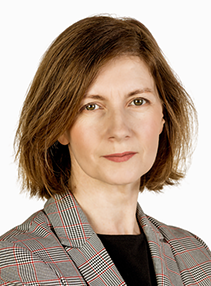
Agnieszka Piotrowska-Piątek
Kielce University od Technology, KOPIPOL
KOPIPOL: 30 lat pracy na rzecz polskiej nauki
Doctor Habilitated in Economic Sciences in the field of Management; currently a Professor and Head of the Department of Economics and Finance at the Faculty of Management and Computer Modelling, Kielce University of Technology. She is the Chairwoman of the Kielce Branch of the Scientific Society for Organisation and Management as well as of the Kielce Branch of the Polish Statistical Society. For many years, she has successfully combined a passion for conducting scientific research and educating students with management practice. Her research interests focus on management in the public sector, higher education management, business innovation, and demography. She has been associated with the Kopipol Association since 2016.
The presentation will cover the history, scope, and effects of the activities of KOPIPOL, an organisation for the collective management of copyrights of authors of scientific and technical works. In particular, it will cover the individual distribution system, which compensates creators for the copying of their works within the scope of permitted personal use. The Association's new initiatives, which support research and publication projects by Polish creators, will also be highlighted.
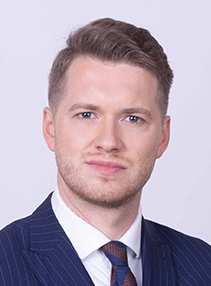
Paweł Poznański
Doctoral School of Social Sciences, University of Warsaw; Nencki Institute of Experimental Biology PAS (Polish Academy of Sciences)
Pracowniczy utwór naukowy – konstrukcja prawna a praktyka instytucji naukowych
A lawyer registered with the Warsaw Bar Association as a non-practising lawyer. He specialises in intellectual property law. He works as a lawyer at the Nencki Institute of Experimental Biology of the Polish Academy of Sciences. After graduating from law school at the University of Białystok and obtaining an LLM in intellectual property (IP) law at the University of Alicante, he completed an internship under the Pan-European Seal programme at EUIPO. He is a student at the Doctoral School of Social Sciences at the University of Warsaw in the field of legal sciences. The topic of his research project is ‘The consumer model in trademark law’. He is a member of AIPPI Poland and secretary of the Industrial Property Law Section at the District Bar Council in Warsaw.
An employee scientific work constitutes a special category within the copyright system. According to Article 14 of the Polish Copyright and Related Rights, the proprietary copyrights to a scientific work remain with the creator, while the scientific institution is granted only the right of first publication. This arrangement constitutes an exception to the general rule, under which the proprietary rights to an employee work are acquired by the employer. However, the seemingly narrow regulation concerning employee scientific works gives rise to numerous interpretative doubts and practical tensions. These relate both to the scope of the scientific institution’s rights as an employer and to the position of the creator in the process of publishing research results, the rules for managing copyright and the obligations arising from the system of scientific organization and evaluation. This raises the question of whether the current legal solutions are consistent with the realities of contemporary scientific communication, particularly in the context of the frequent requirement to publish under the open science model.
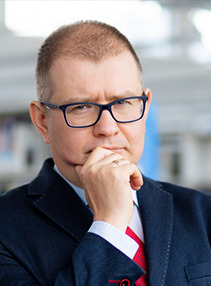
Marek Salamonowicz
Kazimierz Wielki University in Bydgoszcz
Typy licencji Creative Commons a dopuszczalność eksploracji tekstów i danych (TDM) w świetle dyrektywy DSM
University Professor at the Faculty of Law and Economics of Kazimierz Wielki University in Bydgoszcz; Head of the Department of Civil Law. He is a practising legal adviser. Editor-in-Chief of the academic journal Dogmatyka Prawa. Recipient of the award of the Institute of Justice in Warsaw for the best habilitation dissertation in legal sciences (2019) for the thesis entitled The Content and Legal Nature of Research and Development Contracts. In 2012, he completed the “TOP 500 Innovators: Science – Management – Commercialisation” programme at Stanford University. In 2025, he completed the Professional Education programme at the Massachusetts Institute of Technology (MIT) in Boston – „Breakthrough Innovation: Harnessing AI to Create Value”. He is the author of approximately 90 academic publications, including three sole-authored monographs. He has prepared numerous expert reports and legal opinions commissioned by public institutions and non-governmental organisations. His research activity focuses on intellectual property law and civil law, with particular emphasis on contract law and competition law. He specialises in the legal aspects of technology transfer, contracts concerning the commercialisation of research and development results, access to research data, and the protection of the external appearance of products.
This presentation aims to outline the relationship between various Creative Commons (CC) licence types and the exceptions for Text and Data Mining (TDM) introduced into Polish copyright law in 2024. The discussion focuses on whether CC licences function as, or contain, an effective "opt-out" mechanism to prohibit commercial TDM. To resolve this issue, it is essential to determine whether the licensing metadata and the legal code satisfy the requirement of machine-readability. Specifically, the paper examines whether the "Non-Commercial" (NC) clause expressed in natural language can be interpreted as a restriction on TDM beyond the statutory research exception. Furthermore, the analysis addresses whether the CC-BY-ND licence allows for a legally effective opt-out and argues that such a reservation regarding works previously released under CC-BY terms could be seen as inherently inconsistent with the nature of that licence. These conflicting interests of licensors, publishers, authors, and AI providers are reflected in recent EU member state case law and ongoing academic discourse. Particular emphasis is placed on the potential impact of the pending CJEU ruling in the landmark case C-250/25 (Like Company v. Google), which is expected to define the future of TDM practices within the European Union.
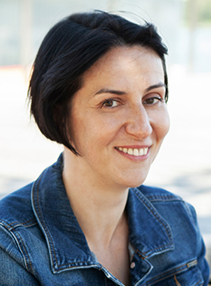
Elżbieta Sobczak
Maria Grzegorzewska University in Warsaw
Dostępność ebooków jako wyzwanie rynku wydawniczego. Współpraca z podmiotami zainteresowanymi wdrożeniem dostępności publikacji cyfrowych na polskim rynku książki naukowej
PhD in humanities, since 2024 director of the Maria Grzegorzewska University Press, and from 2013 to 2022 director of the Cardinal Stefan Wyszynski University Publishing House. She is a member and secretary of the Association of Academic Publishers. Since 2024, a member of the Accessibility Committee at the Polish Chamber of Books.
In an era of growing importance for digital publications, the accessibility of e-books is emerging as a key issue for the publishing industry. Academic publishers face a particularly challenging task in this regard, given the complexity of the text and accompanying charts, tables, graphs and illustrations, all of which must be presented in an accessible way.
The presentation examines the collaboration between the Digital Book Accessibility Team operating within the Polish Book Chamber and the State Fund for the Rehabilitation of Persons with Disabilities, responsible for the implementation of the provisions of the Polish Accessibility Act. The Act of 26 April 2024, in force since 28 June 2025, introduces an obligation to ensure the accessibility of electronic books, while simultaneously generating numerous practical challenges.
The author will discuss bottom-up practices adopted by academic publishers in the preparation and dissemination of accessible electronic publications. Particular attention is given to examples of cooperation between the Association of Higher Education Publishers, university presses, and the Polish Foundation of the Blind and Partially Sighted “Trakt,” which supports publishers in the process of adapting publications to accessibility requirements.
Dorota Starzyńska
University of Lodz
Wykorzystanie publikacji naukowych i technicznych w biznesie – wyniki badań własnych
Doctor of Economics in the field of management sciences. Since 2008, an employee of the Department of Corporate Finance Management at the University of Łódź. Author and co-author of 67 scientific publications, including 21 on the subject of foreign direct investment in Poland.
The author of the presentation discuss the utilisation of scientific and technical outputs in business activities, based on research conducted among 300 enterprises from the Łódź region. The author analyses the extent to which companies draw on scientific knowledge and technical solutions, as well as the benefits and barriers associated with their implementation. The research findings indicate that enterprises recognise the importance of innovation and specialised knowledge for development and competitiveness; however, the level of their utilisation varies considerably. The main obstacles include limited access to up-to-date research, implementation costs, and a lack of appropriate competencies. At the same time, companies that actively engage with scientific outputs achieve better results and experience faster growth. The paper emphasises the need to strengthen collaboration between business and the scientific community, highlighting knowledge transfer as a key factor in enhancing enterprise innovation.
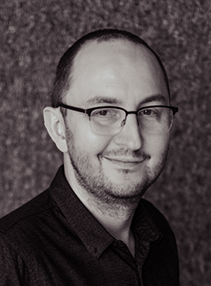
Łukasz Maj
Lublin University of Technology
Dostępne pliki PDF – warsztaty
DTP Specialist at LUT Publishing House. He has been associated with the publishing industry since 2007. He gained experience working with a wide range of formats – from newspapers and richly illustrated specialist magazines to medical literature.
Currently, he handles the comprehensive preparation of scientific publications, both in print and electronic versions. He specialises in typesetting of monographs and textbooks with complex structure (formulas, tables, charts). In his work, he prioritises digital accessibility, ensuring that specialist knowledge is technically accessible to every user.
When writing publications and other documents, it is important to prepare the source material properly. This workshop is a practical guide to creating PDF files that comply with accessibility rules and are understandable to assistive technologies (e.g., screen readers). During the workshop:
Kasper Ostrowski
Aarhus University, Denmark
Digital accessibility of PDF files – workshop (warsztaty w j. angielskim)
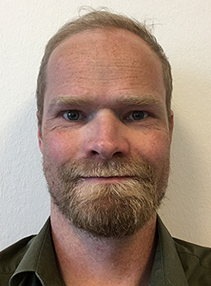
He is managing editor of the online and open access journal “STS Encounters”. He is also a cheese scholar, academic radio montage entrepreneur, empirical printmaker and daily orchestrator of the Center for STS studies situated at Communication and Culture at Aarhus University, Denmark. He holds a master’s degree in Dramaturgy and Multimedia and a PhD from Information and Media studies at Aarhus University.
Getting involved with editorial accessibility can feel both daunting and challenging. In this presentation/workshop, I will share my somewhat potholed journey into the world of editorial accessibility. Together we will – quite literally – cut our way into some of the very concrete problems that can arise when working with digital accessibility, explore them hands-on and discuss practical implications. We will not be using any specialised equipment, only paper and scissors.
Katarzyna Pełka-Smętek
Lublin University of Technology
Dostępne pliki PDF – warsztaty
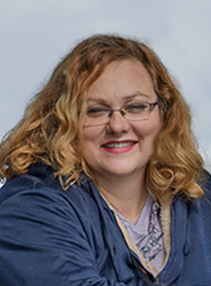
MA in Library and Information Science (Maria Curie‑Skłodowska University) and BEng in IT Education (Lublin University of Technology). She is a curator at the Centre of Scientific and Technical Information, where she has supported users in accessing scientific and digital information for over 15 years, combining library, technological, and educational perspectives.
She works with information in many forms — from digitising academic library collections and creating digital libraries, to editing, DTP typesetting, and PDF accessibility. In her work, she pays particular attention to ensuring that digital content is understandable, useful, and accessible to the widest possible audience. She is an experienced trainer and science communicator, conducting workshops for people of different ages and needs. Currently, she focuses on digital accessibility and the responsible use of artificial intelligence in libraries, education, and information work.
When writing publications and other documents, it is important to prepare the source material properly. This workshop is a practical guide to creating PDF files that comply with accessibility rules and are understandable to assistive technologies (e.g., screen readers). During the workshop:
